

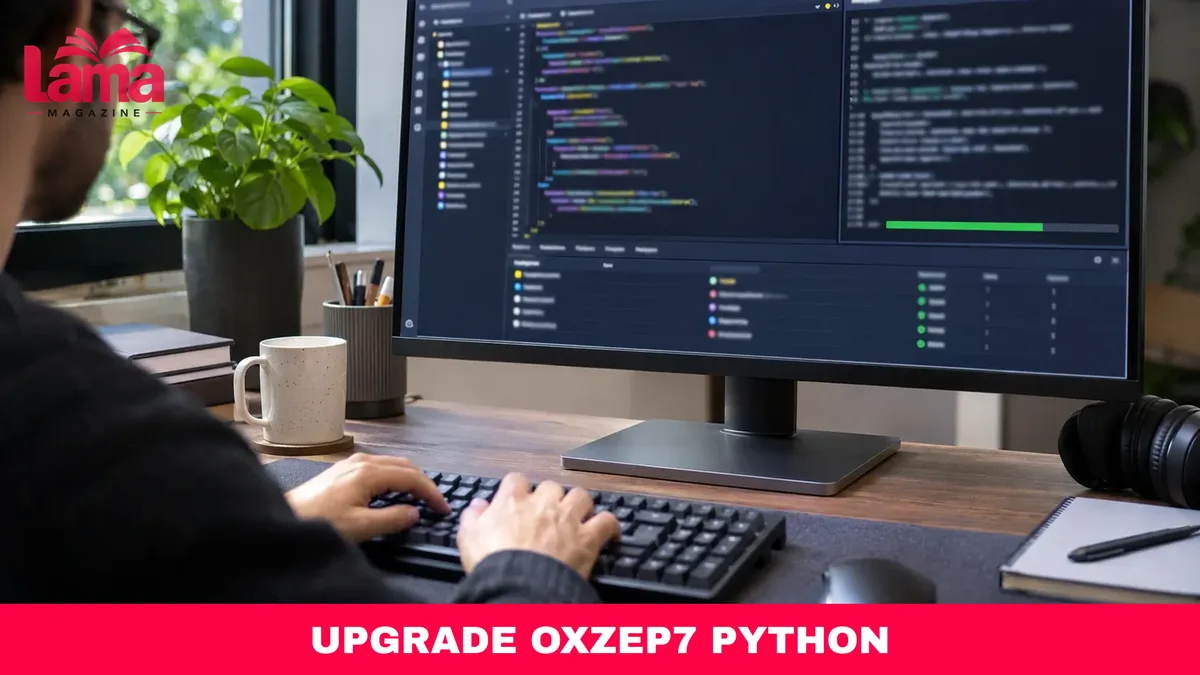
If you have searched for upgrade oxzep7 python, you may be trying to update an unfamiliar Python application, install a newer software version, or fix a problem in your development environment. The challenge is that reliable information about Oxzep7 is limited, and online descriptions do not consistently identify what the software actually does.
Some websites describe Oxzep7 as a Python-based development tool, while others discuss it as a private application or an unverified software name. These conflicting explanations make it difficult to identify a legitimate installation method.
Fortunately, you can investigate the name, check your existing Python environment, and follow established software update procedures without taking unnecessary risks. This guide explains what is known, what remains unverified, and how to approach the upgrade process safely.
Quick Answer: There is no verified public upgrade procedure for Oxzep7 Python. As of November 5, 2026, the exact oxzep7 project page and package API on the Python Package Index (PyPI) return not-found responses. If Oxzep7 belongs to a private application, obtain its update instructions from the developer. Otherwise, use standard Python tools to manage your environment.
1. What Is Oxzep7 Python, and Why Do People Search for It?
Oxzep7 Python is a software-related search term associated with Python upgrades, installation questions, and application troubleshooting. However, there is an important distinction between encountering a software name online and confirming that it represents an established product.
Python is a widely used programming language supported by an extensive collection of libraries, applications, and development tools. Most publicly distributed Python packages can be researched through the Python Package Index (PyPI).
For Oxzep7, that verification is more complicated.
Is Oxzep7 an Official Python Package?
A direct check of the exact oxzep7 project page and its package API on PyPI returned HTTP 404 responses. This means a public package under that exact name could not be confirmed through those endpoints at the time of research.
The available information also does not reliably establish:
- An official Oxzep7 software publisher or development team.
- A confirmed public source-code repository.
- An authoritative installation or upgrade guide.
- A documented release history or version numbering system.
- Verified Python compatibility requirements.
- Independently demonstrated software features or performance improvements.
These missing details matter because they prevent an accurate description of how Oxzep7 is installed, configured, or updated.
However, an absent public PyPI listing does not prove that no software with this name exists. Python projects can use private repositories, locally developed modules, or proprietary distribution methods.
What Could Oxzep7 Refer To?
There are several reasonable possibilities.
A private Python application: A company or individual developer might use Oxzep7 as an internal project name. Such software may never appear in public repositories.
A locally developed module: A project may contain a directory or Python file named oxzep7 without publishing it as an installable package.
A differently named dependency: Python distribution names and importable module names do not always match. The word appearing in source code may not identify the package that must be installed.
An incorrect software reference: The term might originate from an inaccurate tutorial, an incomplete error message, or an unverified software description.
None of these possibilities establishes Oxzep7’s actual identity. The appropriate next step is to investigate where the name appeared rather than assume that a downloadable upgrade exists.

2. Upgrade Oxzep7 Python: Key Details to Understand
Before attempting any software update, it helps to distinguish three separate operations: updating the Python interpreter, upgrading installed Python packages, and updating a particular application.
Although these activities are related, they solve different problems.
Updating the Python Interpreter
The Python interpreter is the software responsible for executing Python code.
Updating it may provide access to newer language features, security fixes, and compatibility improvements. However, a newer interpreter may also introduce changes that affect existing projects.
Python provides official distributions, documentation, and release information through Python.org.
A Python upgrade should therefore consider the application’s supported versions instead of automatically selecting the newest available release.
Upgrading Python Packages
Python packages provide additional functionality that applications can import and use.
The standard package-management tool, pip, supports installing and upgrading packages from authorized package sources.
For example, the following command upgrades an established package named requests:
Bash
python -m pip install --upgrade requests
This command updates the specified package within the Python environment associated with the selected interpreter.
The --upgrade option tells pip to consider newer compatible releases. It does not upgrade Python itself.
The official pip installation documentation explains these operations and how pip resolves installation requirements. pip documentation v26.3
Updating an Existing Application
An application may include its own source code, dependencies, database structures, configuration files, and deployment requirements.
Updating such software can involve more than running a single package-management command.
For example, a privately maintained application might require a particular Python version and specific versions of supporting libraries.
If Oxzep7 is the name of an actual application in your workplace or development project, its maintainer should provide the relevant compatibility information.
Do not assume that updating Python automatically updates every application built with it.
Python Updates Compared With Package and Application Updates
| Update type | What changes | Main benefit | Main consideration |
|---|---|---|---|
| Python interpreter | The Python runtime | Language improvements and supported security fixes | Older dependencies may not work |
| Python package | An installed library | Bug fixes and available new features | Dependency conflicts are possible |
| Application | Project code or distributed application | Application-specific improvements | May require configuration or data changes |
| pip | The package installer | Improvements to package installation and management | Does not update Python or all packages |
The safest approach is to identify which component actually needs an update before changing the development environment.
3. How to Verify Whether Oxzep7 Python Is Installed
If you are working with a project that mentions Oxzep7, determining its origin is more useful than immediately searching for an upgrade download.
The following checks can help identify whether the name corresponds to an installed package, local module, or private dependency.
Check Your Current Python Version
Open Command Prompt, PowerShell, or a terminal.
On Windows, try:
Bash
python --version
On macOS or Linux, you may need:
Bash
python3 --version
These commands display the version of the Python interpreter available through the selected command.
You can also inspect the interpreter’s location:
Bash
python -c "import sys; print(sys.executable)"
If multiple Python installations exist, the interpreter path helps confirm which environment you are examining.
Look for an Installed Package
Next, run:
Bash
python -m pip show oxzep7
The official pip show command displays information about installed distributions. pip documentation v26.3
If the package is installed under that exact distribution name in the selected environment, pip should display available metadata.
If it is not found, several explanations remain possible:
- The distribution is not installed in that environment.
- Its distribution name differs from its import name.
- The code is a local module rather than an installed distribution.
- A different Python interpreter contains the installation.
You can also list installed packages:
Bash
python -m pip list
This provides a broader view of the environment’s installed distributions.
Check Whether a Local Module Exists
If the name appears in an import statement, try:
Bash
python -c "import importlib.util; print(importlib.util.find_spec('oxzep7'))"
Run this from the relevant project directory using its intended Python interpreter.
If Python finds the module, the output may provide information about its location or import mechanism. If it returns None, Python did not locate that top-level module in the current import path.
This result alone cannot establish whether a similarly named private application exists elsewhere.
Inspect the Project Files
Search the project’s source files and configuration for references to Oxzep7.
Useful places include requirements.txt, pyproject.toml, dependency lock files, import statements, and deployment documentation.
Pay particular attention to the difference between a module imported by source code and a distribution declared as a dependency.
For example, a project may import a module under one name while installing it through a distribution with another name.
If your organization maintains a private package registry, ask the project maintainer which distribution name and repository are authoritative.
4. How to Upgrade a Python Environment Safely: Step by Step
When an application depends on Python, the best upgrade strategy is to preserve the working installation, prepare a separate environment, and verify compatibility before replacing anything.
The following procedure applies to ordinary Python projects. It is not a verified Oxzep7-specific upgrade method.
Step 1: Back Up Your Project
Before modifying an application, preserve the current working version.
Back up its source code, configuration, required data, and dependency specifications. Database-backed applications may require a separate database backup.
If the project uses Git, commit or otherwise preserve your current changes before starting.
A backup gives you a recovery option if a dependency update or code change causes problems.
Step 2: Record Existing Dependencies
Inside the project’s currently working Python environment, run:
Bash
python -m pip freeze > requirements-before-upgrade.txt
This records installed distributions in a format that can help recreate the environment.
The official pip freeze documentation describes this functionality. pip documentation v26.3
Keep in mind that pip freeze records installed versions; it does not establish that those versions are compatible with a newer interpreter. It is also not a complete substitute for a project’s intentionally maintained dependency files.
Step 3: Identify the Required Python Version
Review the application’s documentation and dependency constraints.
If the project specifies a supported Python version, use that requirement when planning the update.
For general Python installations, obtain the appropriate distribution from the official Python download page.
On Windows, Python’s documentation also describes the Python install manager, which supports managing multiple interpreter installations. Python 3.15.2 documentation
Avoid replacing a known working interpreter before confirming that the application operates correctly under the intended replacement.
Step 4: Create a Separate Virtual Environment
Python’s built-in venv module creates an isolated environment containing its own Python executable and package installation location.
On Windows:
powershell
python -m venv .venv-upgrade
On macOS or Linux:
Bash
python3 -m venv .venv-upgrade
Use the intended Python interpreter to create this environment. If your computer has several Python versions, ensure the command selects the version you want to evaluate.
You can then check the environment without activating it.
Windows:
.\.venv-upgrade\Scripts\python.exe --version
macOS or Linux:
Bash
.venv-upgrade/bin/python --version
According to the official Python virtual environment documentation, virtual environments isolate project dependencies from other Python installations. Python 3.15.2 documentation
Step 5: Update pip and Install Verified Dependencies
Use the Python executable inside the new virtual environment.
For Windows:
.\.venv-upgrade\Scripts\python.exe -m pip install --upgrade pip
For macOS or Linux:
Bash
.venv-upgrade/bin/python -m pip install --upgrade pip
Then install dependencies from your project’s verified requirements file, if one exists.
For example, on Windows:
.\.venv-upgrade\Scripts\python.exe -m pip install -r requirements.txt
Bash
.venv-upgrade/bin/python -m pip install -r requirements.txt
These commands assume that requirements.txt exists in the current directory.
If your application uses another dependency-management system, follow its documented procedure instead.
Important: Do not add oxzep7 to the installation command unless you have confirmed its distribution name, source, and maintainer.
Step 6: Check for Dependency Problems
After installation, examine the packages for incompatible or missing requirements.
.\.venv-upgrade\Scripts\python.exe -m pip check
Bash
.venv-upgrade/bin/python -m pip check
The official pip check documentation confirms that this command checks installed distributions for dependency compatibility problems. pip documentation v26.3
A successful result is useful, but it does not prove that every application feature works.
Step 7: Test the Application Before Switching
Run the project’s normal test suite, startup procedure, and essential workflows using the new environment.
Depending on the application, verification may include checking imports, command-line operations, API responses, database access, or scheduled tasks.
Review error messages carefully and compare behavior against the previously working installation.
If you discover an incompatibility, keep the original environment available while investigating the problem.
Only deploy the updated environment after the application passes the checks appropriate to its purpose.
5. Common Oxzep7 Python Upgrade Problems and Their Solutions
Even when the intended task is a conventional Python upgrade, several problems can make the process confusing.
Understanding the difference between installation errors and application errors helps avoid unnecessary changes.
Problem: No Matching Distribution Found
An installation attempt may produce an error similar to:
Plain text
ERROR: Could not find a version that satisfies the requirement oxzep7
This indicates that pip could not locate a suitable distribution through its configured sources and constraints.
Possible explanations include an incorrect package name, an unavailable private repository, incompatible version requirements, or a missing public distribution.
What to do: Confirm the exact distribution name and package source through the project’s documentation. Do not substitute a similarly named package without verifying that it is the intended software.
Problem: ModuleNotFoundError
Python may report:
ModuleNotFoundError: No module named ‘oxzep7’
This means the interpreter could not locate that module through its current import path.
It does not necessarily mean that a public package with the same name should be installed.
Check the interpreter location, active virtual environment, project structure, and dependency declarations.
If the module is part of your own project, verify that Python is being launched from the correct working environment and that the package structure is configured appropriately.
Problem: Python and pip Use Different Environments
A common source of confusion is installing a package with one interpreter and running the application with another.
For example, a computer may contain multiple Python versions, each with a different set of installed dependencies.
Check both commands:
Bash
python -m pip --version
Bash
python -c "import sys; print(sys.executable)"
Using python -m pip helps associate pip with the selected Python interpreter.
When testing virtual environments, using their explicit interpreter paths can make this relationship even clearer.
Problem: Dependency Conflicts After an Upgrade
Updating one package may create incompatibilities with other packages or application code.
For example, a newer dependency release may remove an interface or require a newer Python version than the project currently supports.
Instead of upgrading every dependency simultaneously, review the project’s version constraints and update only the components necessary to solve the identified problem.
Test after each meaningful change.
For larger applications, using a requirements or lock file with tested dependency versions can improve consistency between development and production environments.
Problem: An Unverified Download Claims to Fix Oxzep7
Search results sometimes lead to unfamiliar download pages or software installers.
An attractive product description is not proof of software authenticity.
Before installing anything, verify the developer’s identity, package source, published documentation, and release information.
Avoid executing unfamiliar scripts that request elevated privileges or instruct you to disable security protections.
Also remember that a package appearing on a public index is not automatically trustworthy. Its name, maintainer, repository, and intended functionality still deserve scrutiny.
For an unfamiliar application, downloading nothing until its origin is established is often the safest decision.
What These Problems Mean for the Reader
Most of these issues can be investigated through ordinary Python diagnostics without making assumptions about Oxzep7.
The original error message, environment configuration, and project files are more reliable starting points than an unverified online claim.

If Oxzep7 is maintained privately, the responsible developer or system administrator is the most appropriate source for installation requirements and troubleshooting details.
Frequently Asked Questions
1. What does upgrade Oxzep7 Python mean?
The phrase suggests updating software associated with Python, but no authoritative public Oxzep7 upgrade procedure has been verified. It may refer to an internal application, an incorrectly identified dependency, or a general Python upgrade. The correct interpretation depends on where the name originated.
2. Can I get Oxzep7 Python for free?
No verified public download for an official Python distribution or package named Oxzep7 could be confirmed in the research. A private developer may distribute software under that name, but its availability, licensing, and cost are unknown. Avoid unverified download websites.
3. Is new software Oxzep7 Python officially released?
There is insufficient reliable evidence to confirm an official release under that name. No independently established publisher, version history, or authoritative release announcement was identified. Claims describing newly released Oxzep7 features should be treated as unverified unless supported by primary documentation.
4. How do I check whether Oxzep7 is already installed?
Run python -m pip show oxzep7 using the Python interpreter associated with your project. You can also inspect installed packages, local source files, and dependency configuration. If pip does not recognize the name, it may still refer to a local module or differently named distribution.
5. Can upgrading Python fix an Oxzep7-related error?
Possibly, but only if the underlying problem involves an unsupported or incompatible Python version. Missing modules, incorrect package names, and private repository problems require different solutions. Read the complete error message before deciding whether a Python interpreter upgrade is appropriate.
6. Is it safe to use pip install –upgrade oxzep7?
The command follows valid pip syntax, but the software’s identity and public distribution have not been verified. Do not execute it merely because a website recommends it. First confirm that oxzep7 is the intended distribution and that its source is trustworthy.
7. What should I do if Oxzep7 stops working after a Python update?
Return to the previously working environment if possible, then review the Python version, dependency specifications, and complete error message. Recreate a separate virtual environment with compatible dependencies and run the application’s tests. For privately maintained software, consult the developer’s supported upgrade instructions.
Conclusion
The search for upgrade oxzep7 python raises an important software maintenance question: how can you safely update a Python-related tool when its identity and official documentation are unclear?
At present, there is insufficient verified public information to identify Oxzep7 as an established Python distribution with a documented upgrade process. That uncertainty should guide your next steps rather than encourage experimentation with unfamiliar downloads.
Start by identifying where the name appeared, checking the relevant interpreter and dependencies, and confirming the software’s original source. If you are upgrading a legitimate Python application, preserve its existing environment and test changes in an isolated virtual environment.
For dependable instructions, consult the Python Packaging User Guide and your application’s actual maintainer documentation. These sources provide a more reliable foundation for troubleshooting and upgrading software than unsupported product claims.
We Also Eecommend Reading This Article For More Useful Information: Who Is Grace Nickels? All About Emma Roberts’ Younger Sister

1 Comment
Pingback: Isabella Patricia Phillips: Lou Diamond Phillips' Daughter